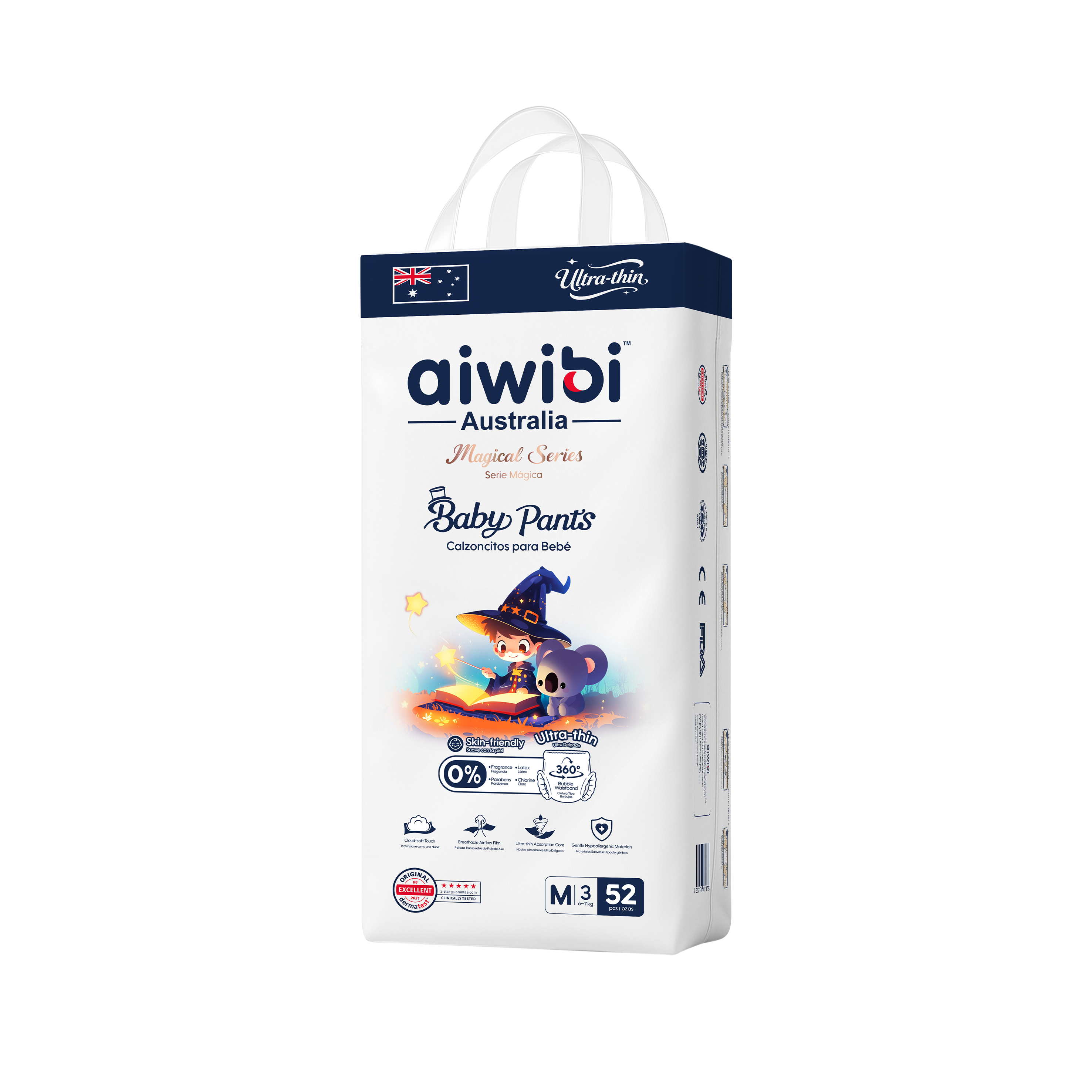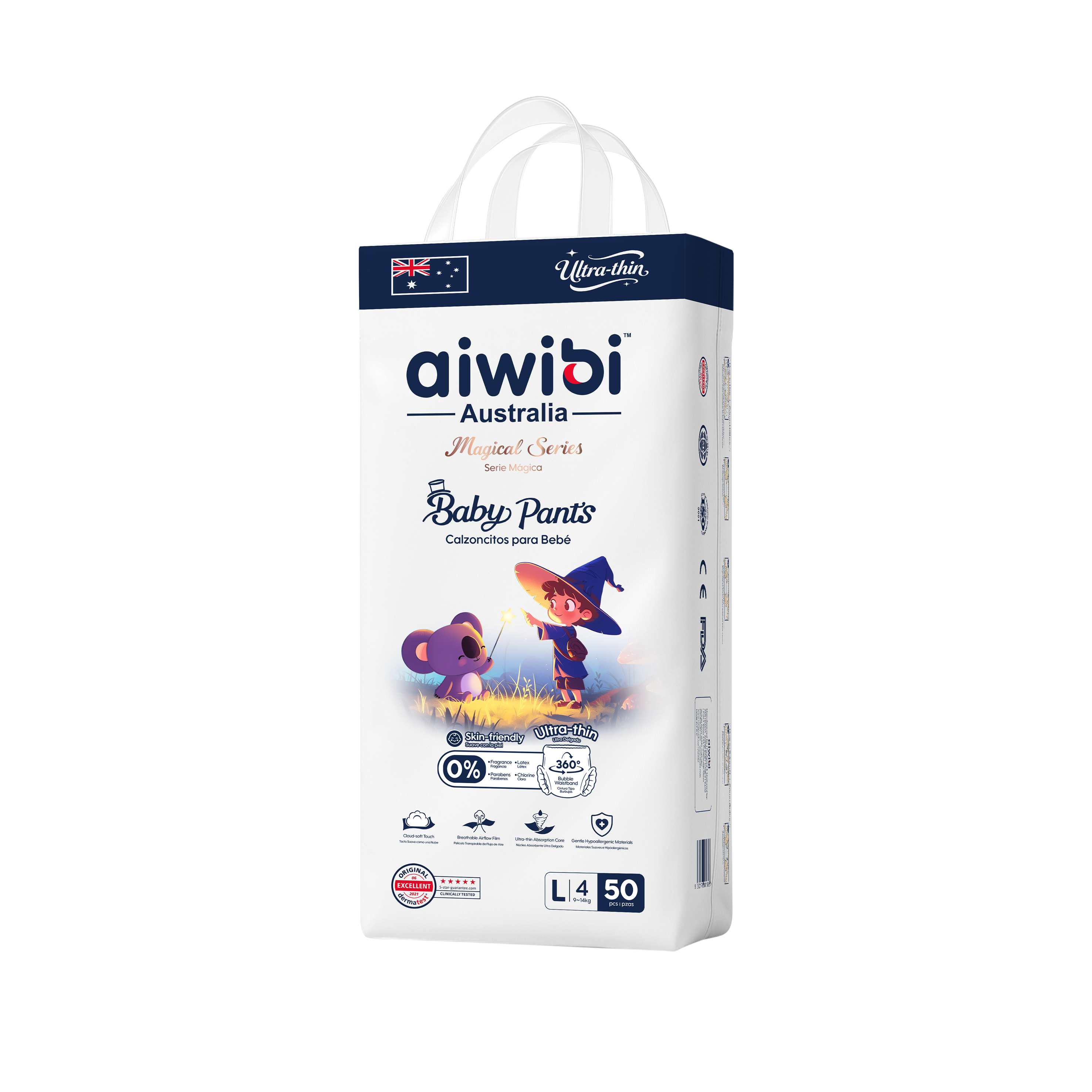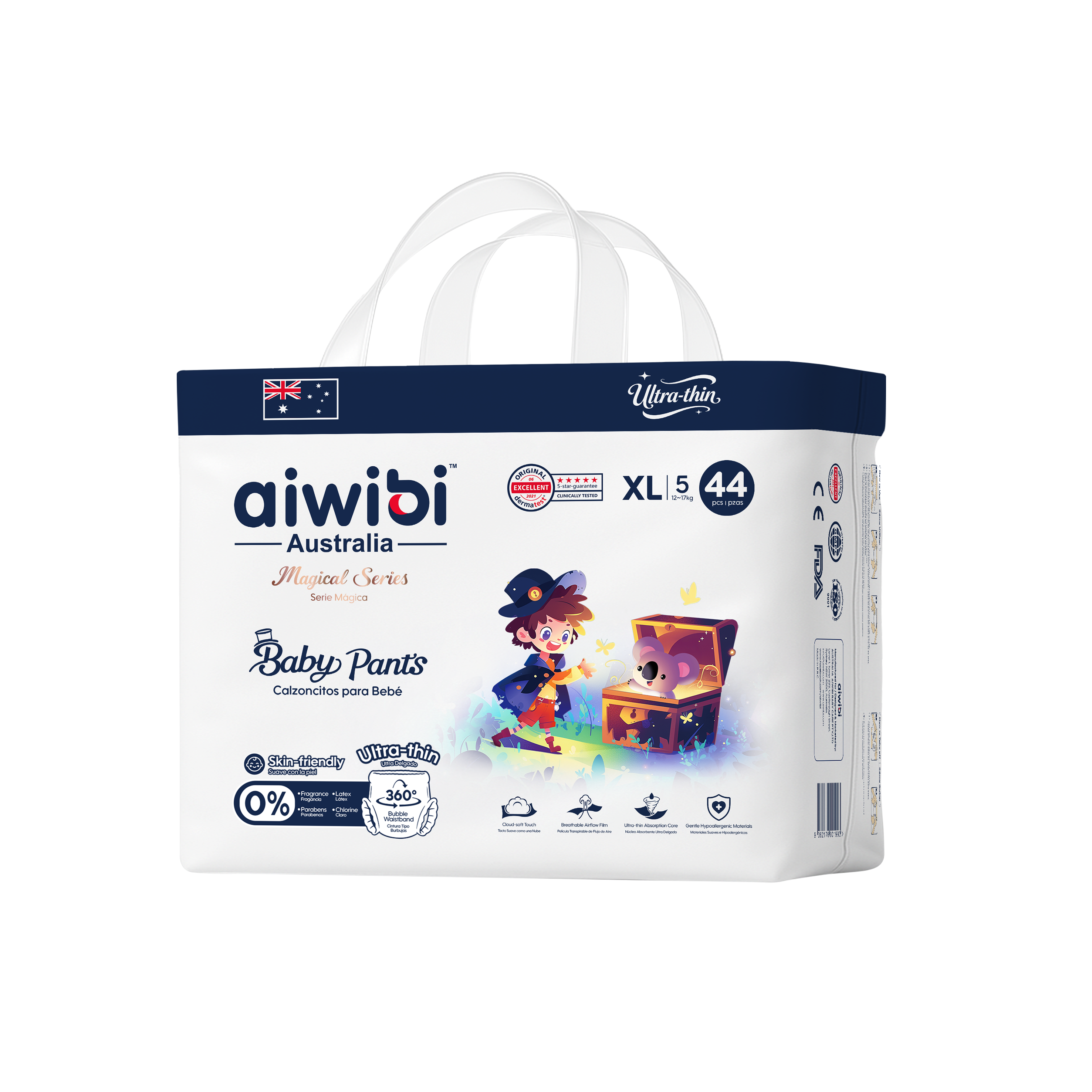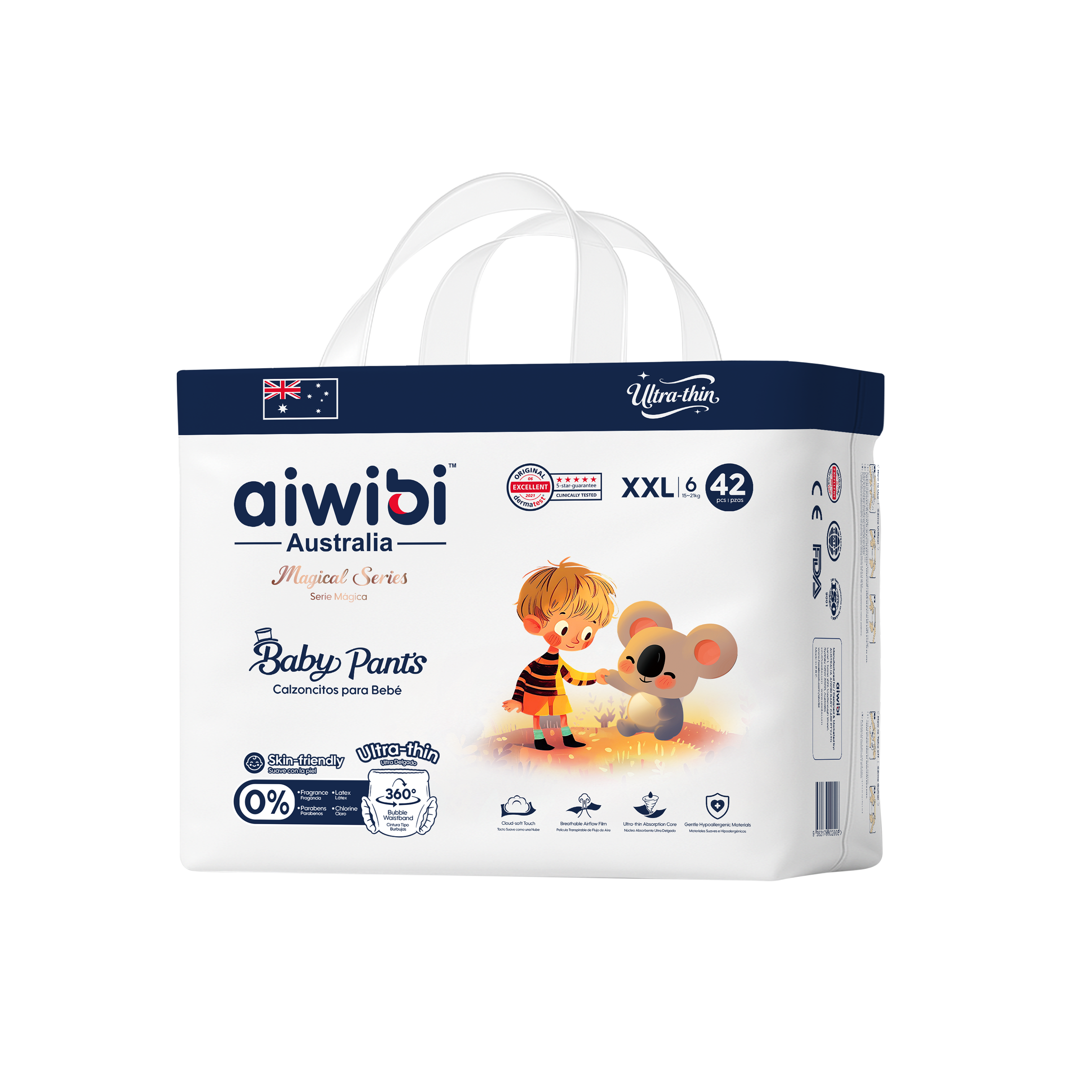

Caring for a newborn is full of little questions—especially when it comes to diapers! As a new mom, you might wonder: What's that line on the diaper for? How do I know if my baby's diaper is wet enough to change?
Let's walk through them step by step, with a few extra tips to make diaper time easier for you and your little one.
Wetness Indicator: The Line on Your Baby’s Diaper
You may have noticed the “wetness indicator”—a special strip inside some diapers. It’s a thoughtful detail we’ve included in all Aiwibi diapers to make your life a little easier. It makes it easy to know when your baby needs a fresh diaper, taking the guesswork out of diaper checks.
How Aiwibi Diapers' Wetness Indicator Works
At Aiwibi, we’ve designed every diaper with a thoughtful, full-length wetness indicator to make your caregiving just a little easier. This special strip runs all the way from the middle of the front to the middle of the back, so you can spot the color change at a glance—no matter which way your little one is turned.
It’s our simple way of giving you a gentle, reliable signal for when a change might be needed.
Here’s what to look for:
When the diaper is dry: You’ll see the indicator in a soft, gentle yellow. It’s quietly there, letting you know all is well.
After your baby wets: The strip responds to moisture and turns a noticeable deep green. As more moisture is absorbed, the color becomes more pronounced, reminding you it’s time for a fresh change.

Pro tip: You don’t need to remove the diaper fully—just gently lift your baby’s legs. Even a slight color change means the diaper is starting to absorb moisture and may need changing.
How Do You Know When to Change a Diaper?
The wetness indicator is a great starting point, but it's not the only thing to consider. Here's how to know when it's time for a change:
1. Follow the Wetness Indicator (But Don't Wait for It to Be Fully Colored)
For Aiwibi diapers, when the indicator turns green—it's a good time to consider a change. A helpful feature is that the green line will also lengthen as more moisture is absorbed, giving you a clear visual cue of how much the diaper is saturated. If the strip becomes a very dark green and fully extended, it means the diaper is very full and may be prone to leaks or cause discomfort for your baby's skin.
Watch how the Aiwibi diaper wetness indicator changes after wetting:
2. Trust Your Touch
Even if the indicator hasn't changed much, gently press the front of the diaper (where your baby's bottom sits). If it feels heavy, squishy, or damp to the touch, change it. Newborns have tiny bladders, so their diapers can feel full quickly—don't wait for a "big" wetness sign!
3. Watch for Your Baby's Cues
Babies hate feeling wet or uncomfortable! If your little one starts crying, squirming, or pushing their legs away from you, check the diaper first. Some babies also get fussy during feedings or play if their diaper is wet—trust those signals.
4. Stick to a General Timeline
- Newborns (0-3 months): Change diapers every 2-3 hours, or after every feeding and nap. Their skin is extra sensitive, so frequent changes help prevent diaper rash.
- Older babies (3+ months): You can stretch to 3-4 hours between changes (during the day). But never leave a diaper on for more than 4-5 hours—even if it doesn't feel too wet.
Urine Output Guide: What's Normal?
Monitoring your baby’s urine output is a simple way to check if they’re getting enough fluids. Here’s a helpful guide based on age, typical amount per wetting, and frequency. Remember, every baby is slightly different—these numbers are averages.
| Age | Typical Urine per Wetting | Typical Wetting Frequency | Notes & Tips |
|---|---|---|---|
| Newborn (0–1 month) | 1–2 tbsp (15–30 mL) | 6–8+ times/day | Expect small but frequent wet diapers. Pale yellow urine is a good sign of hydration. |
| 1–3 months | 2–4 tbsp (30–60 mL) | 5–6 times/day | Diapers may start to be slightly larger per wetting. Keep track of wetness to ensure your baby is well hydrated. |
| 3–6 months | 4–6 tbsp (60–90 mL) | 4–5 times/day | As babies eat more solids, urine may become less frequent but slightly larger per diaper. |
| 6+ months | 6+ tbsp (90+ mL) | 3–4 times/day | With solids and more concentrated feeds, fewer wet diapers are normal. Still watch for color and frequency to ensure proper hydration. |
Simple Hacks to Track Diaper Usage Time
Keeping track of when you last changed the diaper can be tricky (sleep deprivation is real!). Here are easy ways to remember:
- Mark it on your phone: Use a notes app or set a timer when you put on a fresh diaper. For example, if you change at 10 AM, set a reminder for 1 PM.
- Use a sticker or pen: Keep a roll of small stickers near your diaper station. Stick one on the diaper (or your wrist!) when you change it—seeing the sticker will jog your memory.
- Follow your baby's routine: Babies often pee right after eating, napping, or playing. Make it a habit to check the diaper after these moments—you'll soon learn their rhythm.
Caring for a baby is a journey of learning, and you're doing amazing! Diaper time gets easier with practice, and soon you'll read those wetness indicators and your baby's cues like a pro. Remember: there's no "perfect" way—do what feels right for you and your little one.
If you're using Aiwibi diapers, let us know how the wetness indicator works for you—we love hearing from moms in Nepal! Here's to drier days, better sleep, and all the sweet moments with your baby. 💛